
-
DAB+, FM & AM 89, 89.5, 97.2, 103.7 & AM1368
-
Online Listen on Radioplayer
-
Mobile Download the app
-
Smart Speaker Ask your speaker 'play Manx Radio'
Climate Change
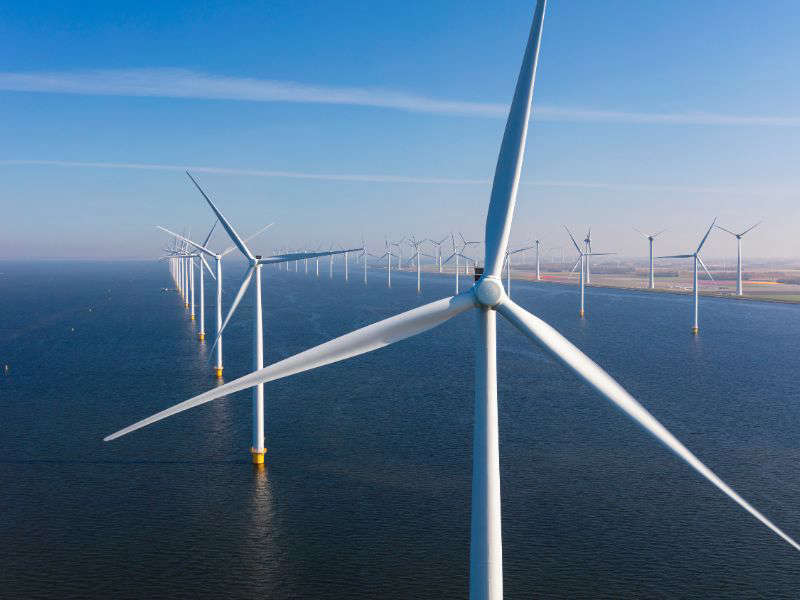
Picture credit: Adobe Stock
By Amy Griffiths
Climate Change
Back in 2021, climate change was the hot topic for the vast majority of candidates.
In fact, almost two thirds named it as one of their key priorities.
But what has been done on the Isle of Man since then to improve its carbon footprint?
October 2021
When Alf Cannan was elected as Chief Minister, he unveiled the members he'd chosen to make up his Council of Ministers.
In that announcement, he also announced chairs of two new boards - the Climate Change Transformation Board and the Housing and Community Board.
The first person to be given the role of Chair of the Climate Change Transformation Board was Garff MHK Daphne Caine.
Meanwhile, a new scheme was launched called the Green Living Grant. This enabled Island residents to apply for up to £6,000 to help make their residential properties more energy efficient.
Later that month, Tynwald approved the Climate Change Plan 2022-2027, which laid out a strategy for reducing the Isle of Man's emissions in line with the net zero emissions reduction targets of 35% by 2030, 45% by 2035 and ultimately achieving net zero by 2050.
Net zero is a term that refers to a point where the carbon emissions caused by humans are equal to those being absorbed and stored by plants and habitats - essentially meaning that humans aren't making more carbon dioxide than the world can absorb.
November 2021
A month later, the new chief minister revealed his 'Island Plan' - a document laying out his vision for the Island over the next 15 years.
The plan highlighted a number of areas to focus on, including 'an environment we can be proud of'.
As well as putting in place a roadmap to achieve the climate change goals set out in Professor James Curran's 2019 report on achieving net zero emissions by 2050, the Island Plan flagged the need for a strategy for food security for the Island, ensuring biosphere policies were embedded across government, along with a flood management and mitigation plan.
February 2022
The then-Treasury Minister, David Ashford, gave his first Budget speech in Tynwald.
In that Budget, he announced £42 million would be set aside to tackle climate change.
That was broken down into:
- £25m to go into the Climate Change Fund, with the aim of moving the Island towards its target of reaching net-zero emissions by 2050
- £9m allocated for measures to support climate change adaptations
- £5m made available to mitigate the impact of environmental damage
- £3m added to the Environmental Protection Fund, which allows for bids submitted by departments that enable the development of climate change initiatives
February 2023
Tynwald supports Manx Utilities plans to seek to build an onshore wind farm on the Isle of Man.
July 2023
The then-infrastructure minister, Tim Crookall MHK, announced two preferred sites for an onshore wind farm had been identified.
The government project was described as part of a drive to produce 75% of Manx electricity through solar and onshore wind by 2026.
August 2023
Government announces a ban on the installation of fossil fuel heating systems in new homes from the start of January 2025.
October 2023
Single use plastic is banned on the Isle of Man.
June 2024
Chair of the Climate Change Transformation Board, Daphne Caine MHK, steps down from the role to focus on her new position as Minister of Education, Sport and Culture.
October 2024
The Climate Change Transformation Board was restructured and moved to be included in the Department of Environment, Food and Agriculture.
The minister, Clare Barber MHK, took on the role as chair in its new format.
Previously it had served as the 'delivery team' for the Climate Change Plan, but now functions as a 'funding board' while maintaining the climate policies previously established.
February 2025
The Minister of Environment, Food and Agriculture, Clare Barber, admitted that achieving some of the climate change targets would be 'challenging'.
However, government insisted it would continue spending money on climate change initiatives.
Mrs Barber said the Isle of Man still had a responsibility to work towards the 2030 goal of a 35% reduction in emissions.
June 2025
Net Zero Isle of Man published its latest report on progress towards government's climate change transformation targets.
It revealed that with the 2030 deadline now just five years away, emissions on the Isle of Man had only gone down by 3.8% since 2018.
At the same time emissions in the energy sector had risen by 21 percent, largely driven by exports.
July 2025
The government said it was still committed to its decarbonisation goals and was making good progress in developing the evidence and plans needed to deliver them.
If the 35% reduction by 2030 is not achieved, it would constitute a breach in the Climate Change Act 2021.
Government committed to developing a fully costed roadmap for electricity decarbonisation by the end of the year, and said the Climate Change Fund continued to support projects across energy, transport and nature restoration.
December 2025
Tynwald rejected an attempt to hold a referendum on government's climate change policies.
Instead, it reaffirmed its commitments to the existing policy approach.
