
Developers behind the wind farm project have published a detailed response to consultation feedback
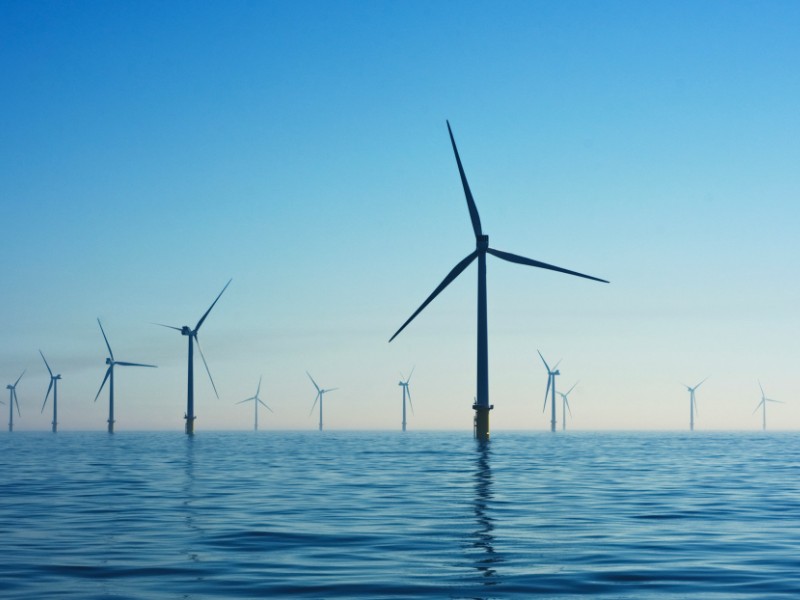
The company behind the proposed Mooir Vannin offshore wind farm has published a series of responses to feedback gathered during a public consultation on the project.
The paper forms part of the application for Marine Infrastructure Consent and is intended to support the project as it enters examination.
For those trying to understand what the project now looks like - and what remains undecided - the document acts as both a defence of the scheme and an explainer of how the consenting process works.
What is Mooir Vannin?
Mooir Vannin is a proposed large-scale offshore wind farm to be built in Manx territorial waters, within a defined area leased from the government under an ‘Agreement for Lease’.
The project would include offshore wind turbines, subsea cables, offshore substations and one or more landfall points connecting the wind farm to the Island’s electricity network.
Power could be supplied to the Isle of Man, and potentially exported to the UK, subject to grid and market arrangements.
The developer is Mooir Vannin Offshore Wind Farm Limited; part of the Ørsted group.
What does the consultation response tell us?
The consultation response does not propose new infrastructure or amend the application. Instead, it responds to feedback already received, and is split into two parts - topics and themes.
Topics address technical and regulatory issues raised by statutory consultees and professional stakeholders. Whereas themes respond to broader issues raised by members of the public.
Throughout, Ørsted sets out its position on whether concerns have led to changes, will be addressed later, or are considered resolved.
Environmental impacts and assessment
A central theme of the document is the Environment Impact Assessment (EIA).
The developer states repeatedly that a full statutory EIA has been completed and that the resulting statement is “complete and fit for purpose”. It says the assessment follows approaches commonly used for large infrastructure projects in the UK, arguing that this was necessary in the absence of Isle of Man-specific guidance.
Where consultees have disagreed with assessment outcomes or methodology, Ørsted acknowledges the disagreement, but has not committed to revising its conclusions.
Instead, it emphasises a “proportionate EIA” approach, meaning impacts judged not to be significant were scoped out at an early stage. Issues such as electromagnetic fields from cables and offshore bats fall into this category, with the developer arguing there is insufficient evidence to justify detailed assessment.
Biodiversity, birds and marine life
On biodiversity, the applicant sets out a voluntary commitment to deliver a ‘Net Positive Impact’, meaning ecological gains would outweigh unavoidable losses.
A project-specific Biodiversity Strategy has been submitted, with detailed actions to be developed after consent once residual impacts are confirmed. Ørsted stresses this work would be fully funded by the company and separate from any community benefit funding.
Bird populations, marine mammals, fish and seabed habitats are all assessed within the EIA. Mitigation and monitoring plans are proposed, although many are submitted in outline and would be finalised post-consent.
Fishing, shipping and navigation
Concerns from the fishing industry and maritime operators feature heavily.
The document explains that the offshore array has been reduced in size and reshaped through what the developer calls a ‘Developable Area Approach’, intended to reduce impacts on fishing groups, shipping routes and visual effects.
Ørsted also points to changes made to increase the navigable gap Mooir Vannin and the nearby Morgan offshore wind farm in English waters, following concerns raised about ferry routes.
Additionally, a Fisheries Liaison Officer has been appointed, and a Fisheries Coexistence and Liaison Plan would govern ongoing engaging if the project goes ahead.
Energy security, reliability and cost
One of the big debates across the Isle of Man is what renewable energy projects mean for the average household. Will it reduce the cost per unit, for example?
The applicant argues that offshore wind is a mature technology capable of delivering predictable, dependable power when integrated into a wider energy system.
It stresses that the project is not intended to replace all other generation, but to form a significant part of a diversified mix that could reduce reliance on imported gas and electricity.
The document claims the project could help lower wholesale electricity costs on the Island, but also makes clear that retail prices are a matter for Manx Utilities and government, not the developer.
Alternatives to offshore wind
Some respondents raised questions about alternative technologies, including tidal power and small modular nuclear reactors.
In Ørsted’s response, it writes that offshore wind was brought forward following a government invitation for expressions of interest, and that wider energy policy choices sit with the Council of Ministers rather than itself.
However, it argues offshore wind if the ‘most cost-effective large-scale renewable option’ available to the Isle of Man, describing other technologies as ‘less mature’, more expensive or constrained by land availability.
Visual impact
The term ‘eyesore’ is not a new one, and it’s been flagged as a concern from residents since the first murmurings of a wind farm were floated.
Ørsted acknowledges that visual impacts cannot be fully mitigated due to the scale of modern offshore wind turbines and the project’s proximity to the Island.
However, it insists the offshore array has been reduced by 17 percent since earlier designs, and that layout changes have been made to lessen impacts from key viewpoints.
Aviation lighting is required for safety, but the EIA concludes this would not significantly degrade views of dark skies overhead, with lights appearing low on the horizon rather than across the night sky.
Decommissioning
Ørsted states that all costs associated with construction, operation and eventual decommissioning would be borne by itself, not the taxpayer.
It says between 85 and 95 percent of turbine materials are recyclable, and has committed not to send turbine blades to landfill.
Financial guarantees are said to be secured through the lease agreements to ensure obligations can be met.
What remains unresolved?
While the document is detailed, it also makes clear that many specifics would be settled later if consent is granted.
Final turbine layouts, detailed monitoring regimes, biodiversity actions, lighting specifications and some landfall decisions would all be agreed post-consent.
In effect, the consultation response draws a line under the principle of the project, leaving significant detail to future stages.
Whether these explanations are ultimate accepted will now be tested during the examination process - where the focus shifts from consultation to scrutiny.
Manx Radio's Lewis Foster sat down with Project Director Jamie Baldwin to discuss next steps for the proposal, which can be listened to via Manx Radio Newscast:
 NSC pool 'remains busy' despite ongoing tile issue
 Hundreds attend Isle of Man Graduate Fair
 No change to diesel prices says EVF after latest shipment
 'No guarantee there'll be any support' amid ongoing fuel crisis
