
One MHK says he won't sign the bill - but what does that mean?
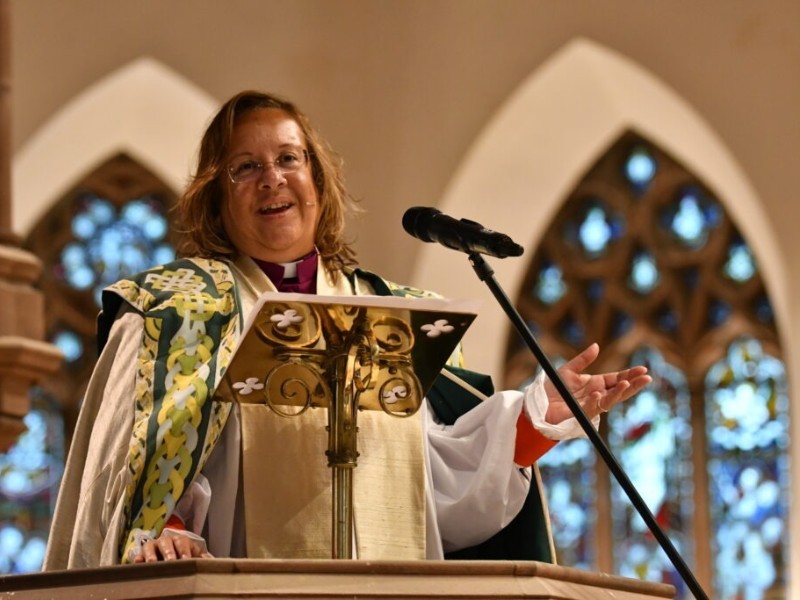
It looks like the Bishop's right to vote in Tynwald is soon to become a thing of the past.
This week, the House of Keys voted to pass the Isle of Man Constitution Bill 2023, which was promoted in the House of Keys by Ramsey MHK Lawrie Hooper and in the Legislative Council (LegCo) by Tanya August-Phillips MLC.
It contains a clause which allows the Lord Bishop of Sodor and Man to continue to be a member of Tynwald and LegCo but will cease to be a voting member.
An amendment to the bill means that it will commence either the day after the end of the current Bishop's tenure or on the fifth anniversary of the announcement of royal assent.
Its passage has inevitably raised questions around the future of the Diocese of Sodor and Man.
The Archbishop of York has previously said the removal of the vote would threaten the position.
But is the move actually set in stone now the House of Keys have voted in favour?
In short - no.
Overnight, Onchan MHK Rob Callister posted on social media that he will not sign the legislation before it's sent for royal assent.
Mr Callister had led calls for a pause in the Bishop's vote debate, hoping to make the matter an election issue.
When the vote was cast yesterday (27 January), 11 members voted for the adjournment, and 13 against.
Those voting for were:
- Rob Callister
- Alfred Cannan
- Claire Christian
- Julie Edge
- Tim Glover
- Tim Johnston
- Kate Lord-Brennan
- Jason Moorhouse
- Andrew Smith
- Chris Thomas
- John Wannenburgh
Those voting against were:
- Alex Allinson
- David Ashford
- Clare Barber
- Daphne Caine
- Ann Corlett
- Tim Crookall
- Joney Faragher
- Michelle Haywood
- Lawrie Hooper
- Sarah Maltby
- Stu Peters
- Jane Poole-Wilson
- Juan Watterson
Ultimately, after nearly two hours of debate, members voted in favour of receiving the report, with a slight amendment from Douglas Central's Chris Thomas to include that the House strongly supports the continuation of the Diocese of Sodor and Man.
In his social media post last night, Mr Callister said: "For me personally, this will be the first time I do not sign a piece of legislation in Tynwald.
"I would urge as many of my colleagues as possible to consider doing the same, in order to demonstrate to the Lieutenant Governor and the Crown that this legislation does not have the full support of the people of the Isle of Man."
But could withholding a signature actually have an impact?
In short - yes.
Any member is entitled to withhold their signature from a piece of legislation.
What's key here though, is the fact that a bill is only given royal assent if both the UK Government's Ministry of Justice approves it, and it has been signed in Tynwald by a quorum - that's the minimum number of members that must be present to make the proceedings valid - of both branches.
In the House of Keys, a quorum is 13 members, and in LegCo it's five.
So, if all members follow their voting pattern from this week's sitting, the bill will still successfully proceed.
But until that point, in theory, anything could happen.
Normally this signing is not done until the Clerk of Tynwald has been notified that the Lieutenant Governor has been authorised to give royal assent on behalf of His Majesty, meaning there is often a delay of some months between the final stages in the branches and such authorisation.
However, as we're in a general election year, the bill will be signed at the last sitting of Tynwald before parliament is dissolved.
It's then expected that the royal assent, if given, will be announced at a sitting of Tynwald after the general election.
It will then eventually be promulgated on Tynwald Day.
 UK Government under scrutiny over Manx assisted dying legislation
 Men jailed for £49,000 cocaine ferry importation plot
 Warning in place as hill snow expected overnight
 Additional payments to Meat Plant Board have stopped, says DEFA
