

The UK is setting up its first space squadron to defend crucial satellites and detect hostile missile attacks.
The head of the RAF said space had "become a warfighting domain whether we like that or not".
Air Chief Marshal Sir Harv Smyth pointed to "dangerous" and "provocative" manoeuvres by Russian satellites near Finnish commercial satellites, and attempts to disrupt GPS signals.
He said disruption to GPS satellites could cost the UK £1.4bn per day.
"Make no mistake, the satellites services you may have taken for granted now face unprecedented threats," said Sir Harv, speaking at the UK Space Power Conference in London.
No. III Space Effects Squadron will include personnel focused on both defensive and offensive actions and will be the first in a series of new space units.
Sir Harv said "no one wants a war in space", adding that the UK would "never escalate" a conflict there.
"We are positioning to deter this," he told the conference.
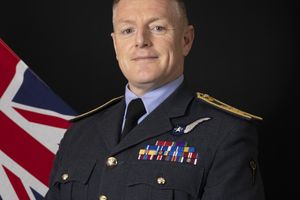
The interim head of the new squadron, Air Commodore Darren Whiteley, said ballistic missile warning technology had become more vital in recent years due to increased launches connected to the Iran and Ukraine wars.
Large ballistic missiles follow an elliptical trajectory, leaving the Earth's atmosphere in a boost phase before descending.
Defence Secretary Wes Streeting told Sky News earlier: "Just as we're thinking about protecting physical assets here on Earth, we also need to be prepared to defend those assets in space, because this is a new frontier of risk and threat."
Mr Streeting will also speak at the London conference later.
The announcement comes after the US last week confirmed, for the first time, it had deployed a space weapon to guard against "hostile adversary action". It did not give further details.
America set up its own Space Force under the defence department in 2019.
A 'Golden Dome' system, including ground and space based interceptors, is planned by the US to take out hostile missiles.
The Pentagon has warned that updated measures are needed to counter the latest hypersonic and intercontinental ballistic missiles developed by Russia and China.
Earlier this month, the UK government also unveiled a new £7.8bn space strategy with a focus on defending against threats from space.
Read more from Sky News:
Oasis announce more shows
At least 11 dead in mass shooting in South Africa
Some £880m is earmarked over the next four years for technology to track "military activity on the ground and potential attacks on satellites".
Nearly £3bn will go to the Connectivity in Low Earth Orbit and SKYNET defence communications programmes, a system that plays a vital role in keeping UK troops connected around the world.
Meanwhile, SaxaVord Spaceport in Shetland - the UK's most northerly point - will get an extra £30m. A number of firms are planning to use the spaceport to launch commercial rockets.

(c) Sky News 2026: UK space squadron to guard against 'unprecedented threats' against satellites
 Six protesters arrested as migrants 'at sea for 36 hours' arrive in Dover
 RAF training aircraft crashes in Wales - two pilots injured after ejecting
 Fraud 'mastermind' behind gang who used TV and film aliases jailed for five years
 Space Command chief suspended amid investigation into alleged sexual offence
