
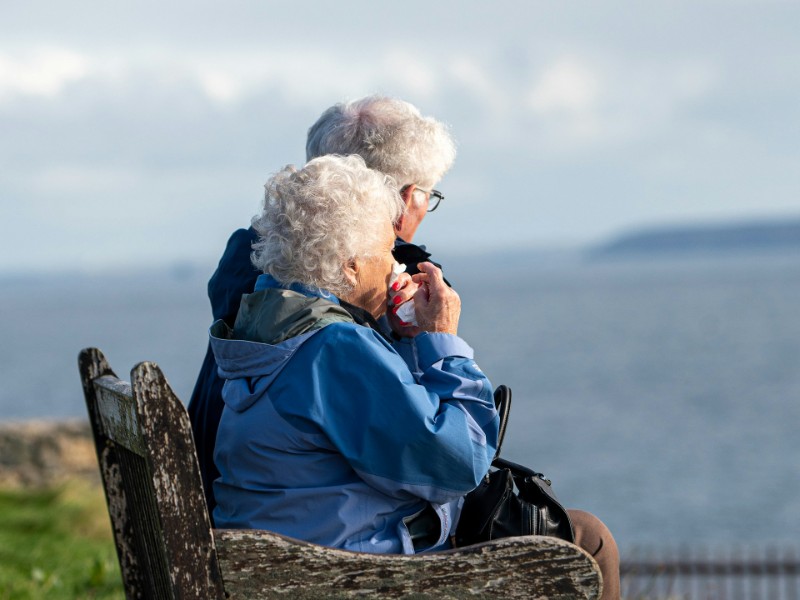
Figures suggest Island prevalence of 0.7 percent, as government acknowledges demand likely to rise due to aging population
A dementia needs assessment is currently being carried out by Public Health Isle of Man, and is expected to be published in the second quarter of the 2026/27 financial year.
The update was provided in the House of Keys after Arbory, Castletown and Malew MHK Jason Moorhouse asked the Cabinet Office Minister David Ashford what assessment had been made of future dementia demand, and how often data on the number of cases is updated.
In response, Mr Ashford explained that Public Health does not hold individual diagnostic data, as diagnoses are recorded within primary care and specialist clinical services.
As a result, there is no fixed reporting cycle for case numbers, with figures updated as part of routine clinical activity within those services.
The minister told the Chamber the needs assessment will examine a wide range of factors, including both modifiable and non-modifiable risk factors, incident and prevalence, healthcare use, mortality, current services and support, care and management, end-of-life provision, and projected future demand.
Mr Ashford claims Public Health has already completed the scoping and evidence-gathering phase of the work, drawing on national and international data on dementia prevalence, risk factors and service models.
The project has now moved into its analytical phase, using available population and service data to forecast future demand on the Island.
He also acknowledges that the true number of people living with dementia is likely to be higher than the number formally diagnosed, particularly among those with mild symptoms that have limited impact on daily life.
Manx Care is reported to have undertaken extensive work to better understand the “lived experience” of people with dementia and “improve awareness” of early signs among healthcare professionals, with the aim of supporting earlier diagnosis. However, he believes the wide range of conditions grouped under demential can make it difficult to establish fully accurate figures.
Data given in Mr Ashford’s response suggests GP-recorded data shows a demential prevalence on the Isle of Man of 0.7 percent - comparable to Jersey’s figure, and similar UK areas which average between 0.7 and 0.8 percent.
He concludes by acknowledging that dementia risk increases with age, meaning an aging population is likely to see higher numbers of cases over time.
 Further two sailings cancelled
 Peel Commissioner at centre of row would 'welcome' external investigation
 Outdoor seating to be installed at Barbary Coast
 One year on: What's the latest for our Assisted Dying Bill?
