

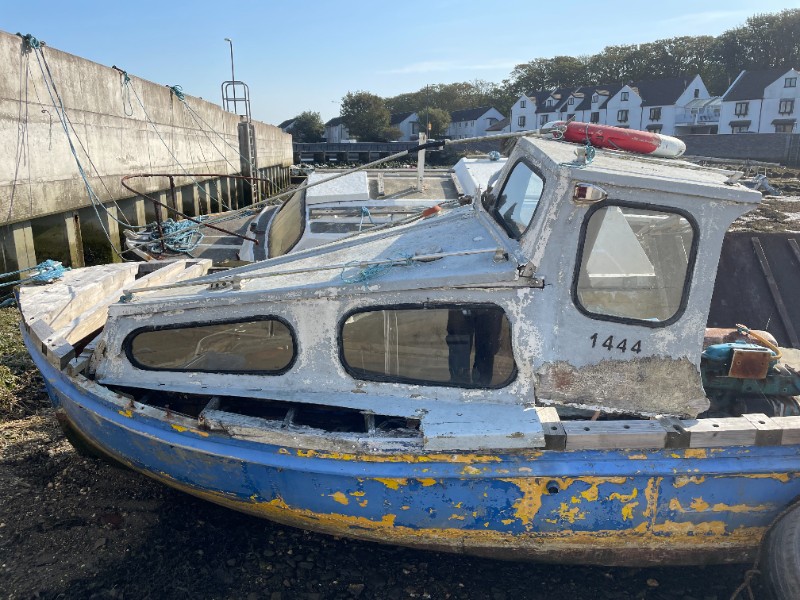
Almost seventy removed from harbours in three years
The Department of Infrastructure says it is working with boat owners to tackle the issue of derelict and abandoned vessels in the Island’s harbours.
An ongoing campaign hopes to identify boats which are showing signs of disrepair, at risk of sinking, or those which could cause pollution or navigation hazards.
The department says its initiative will reduce bureaucracy, with officers working directly with owners to find practical solutions - ensuring safe, clean and well‑managed harbours for all users.
Over the past three years, the Department has removed and safely disposed of a number of derelict boats:
- 28 in 2025
- 30 in 2024
- 11 in 2023
This campaign, it says, will focus on early engagement - adding that, while some boats can look scruffy, it doesn’t necessarily mean that they are unseaworthy.
‘We want to make it clear that our first approach is always to talk. Most issues can be resolved by working with owners early, long before a boat becomes a hazard. This campaign is about being proactive, avoiding unnecessary costs, and ensuring our harbours remain safe and attractive places for everyone who uses them.’ - Deputy Harbour Master Gary Lewin
By working in partnership rather than relying solely on formal processes, the Department says it aims to:
- Reduce costs for both boat owners and government
- Organise disposal of a number of boats at the same time, achieving better-value waste management contracts
- Avoid lengthy, bureaucratic procedures whenever possible
- Provide owners with a clear path to remove or repair vessels before they become a hazard
Owners of vessels that are behind on harbour dues will also be contacted, enabling earlier conversations about the future of their boats.
As a result of working more closely with boat owners, the money owed to the Department has fallen substantially, it adds.
The Isle of Man’s existing boat registration system allows the Department to trace owners more quickly and easily than in the UK, where no equivalent national register exists. This significantly speeds up engagement and reduces enforcement complications.
Where removal becomes unavoidable, the department says it will act under its powers within the Harbours Act 2010, ensuring a fair and transparent process.
Once removed or legally destroyed, all vessels are disposed of in line with the Department of Environment, Food and Agriculture (DEFA) guidelines, ensuring environmentally responsible handling of materials.
 Shipping company boss discusses future of Ramsey shipyard
 Government told to giddy up with the horse trams
 Bus drivers strike reaches half-way point
 Student loans branded 'biggest barrier' to higher education
