'We do not agree that such mortality can be insignificant in a Manx context'
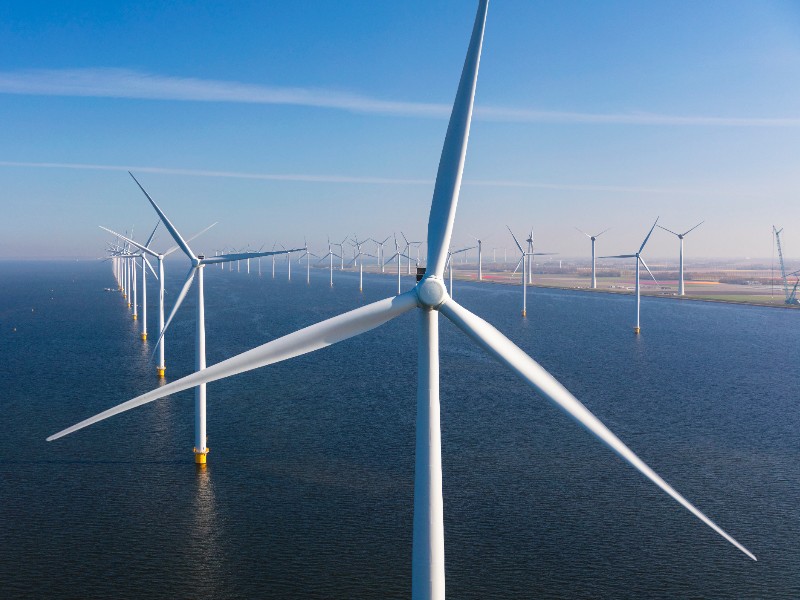
Ecological assessments undertaken by the applicant behind the proposed Mooir Vannin offshore windfarm are 'inadequate' and the impacts on the Manx environment 'understated'.
That's the verdict from the Island's leading nature conservation charity, the Manx Wildlife Trust.
It has issued a statement declaring its belief that assessments provided by Ørsted 'do not provide clear analysis of impacts or mitigations in a specifically Manx context'.
The charity says it is not 'approaching this process as a simple question of being “for” or “against” the proposed development' but rather it is trying to take a balanced look.
Indeed, it says it supports the need for renewable energy and recognises the urgency to act on climate change.
However, it is 'concerned that the impacts of this proposal on wildlife populations in the Isle of Man have likely been understated and that the assessments provided by the applicant do not provide clear analysis of impacts or mitigations in a specifically Manx context'.
Chief Executive Graham Makepeace-Warne told Manx Radio the charity has been doing a lot of work behind the scenes, and wanted to release a statement to reflect that:
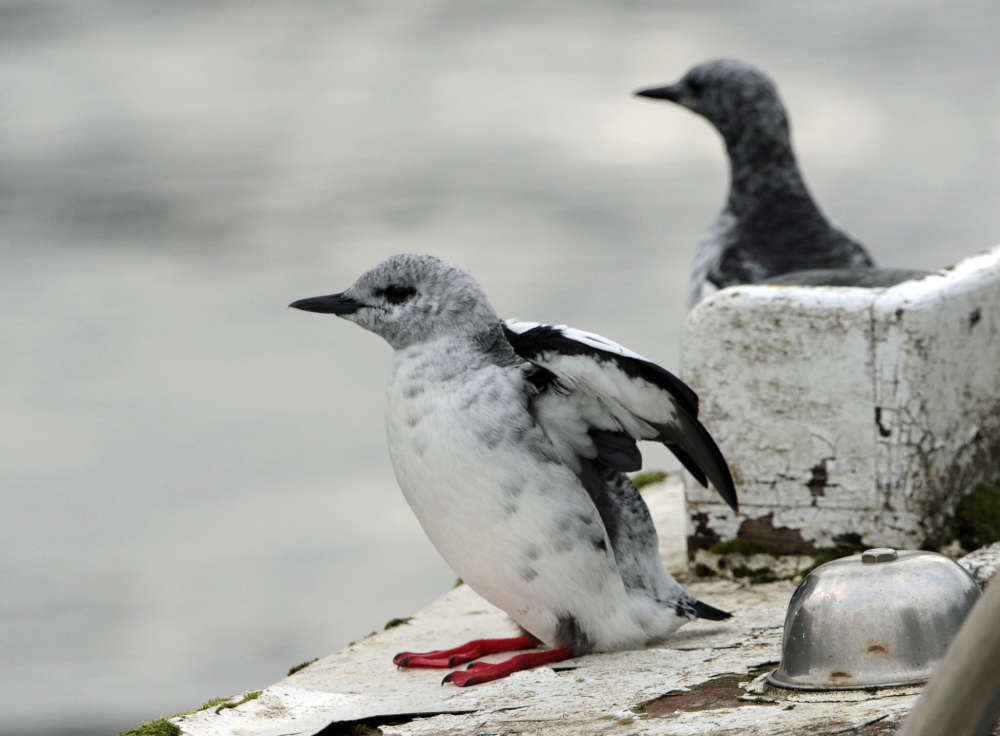
(Black Guillemot photographed in Peel marina. Picture credit: Beryl Quayle/MWT)
SEA BIRD STATISTICS
At the core of this is the fact that whilst the Manx Wildlife Trust might not be "for" or "against" the development, it does have a number of ecological concerns, and they centre around its belief that 'several of the baseline ecological assessments' being used by the applicant are 'inadequate and do not allow for an appropriate assessment of potential ecological impacts'.
For example it says: "The Applicant’s annual expected number of bird deaths is 660 individual birds per year, including the modelled deaths of 466 auks (the seabird group which includes locally amber-listed Guillemot, red-listed Razorbill and red listed Puffin).
"In a Manx context, for Guillemot, the modelled 309 annual deaths represent around 21% of the known Manx over-wintering population.
"For Razorbill, the modelled 149.5 annual deaths is actually significantly greater than the entire Manx over-wintering population. We therefore do not agree that such mortality can be insignificant in a Manx context."
They say that a 'robust framework of Manx-specific guidance for ecological assessments currently does not actually exist, so much of the current legislation broadly appropriates British environmental regulations without taking into account the Manx context'.
In layman's terms - the charity argues we're seeing impact numbers being compared to much larger jurisdictions, and that could mean disproportionate harm for Manx nature.
David Bellamy is the charity's Head of Conservation and Land:
The Manx Wildlife Trust says it will continue to send representatives to any further hearings held as part of the examination process - although no more are currently scheduled.
It will also be submitting a statement of common ground with the applicant before this stage closes, which will be made publicly available.
The examination window is due to close on 9 September 2026.
RESPONSE
Manx Radio contacted Ørsted for comment.
In response, a spokesperson said: "Our environmental surveys and impact assessment methods follow internationally recognised standards and were developed through extensive consultation with Manx statutory (e.g DEFA) and Tertiary (e.g. Manx Wildlife Trust) stakeholders.
"They have also been scrutinised throughout the Examination.
"Manx Wildlife Trust has been engaged at all stages of project development and have had multiple opportunities to comment on both the scope of the surveys and the assessment methodology. No alternative assessment approach has been proposed by Manx Wildlife Trust or other stakeholders.
"During the Examination we have provided extensive clarification on what we mean by the term “uniquely Manx”. It means applying robust internationally recognised best-practice while reflecting the Island’s specific environmental conditions, which is exactly what we’ve done.
"We understand that the Examining Body is satisfied with those explanations, having no further questions in relation to the term.
"In relation to the potential effects upon features of ornithological interest, our assessment concluded there are no likely significant effects requiring mitigation and that conclusion has been supported by the evidence presented throughout the Examination."
Manx Radio has also contacted the Isle of Man Government, and is awaiting a response.
You can read the Manx Wildlife Trust's statement in full HERE.
You can listen to this report in full below:
And you can hear these interview in full in our latest Newscast, available now:
 Afternoon Liverpool sailings cancelled
 New MHKs need to learn to balance constituency and national issues
 "Would you support a national speed limit?"
 Peel Commissioners wants residents' views on East Quay hotel plans
