
MHK to push for independent investigation of complaints concerning officers of all ranks
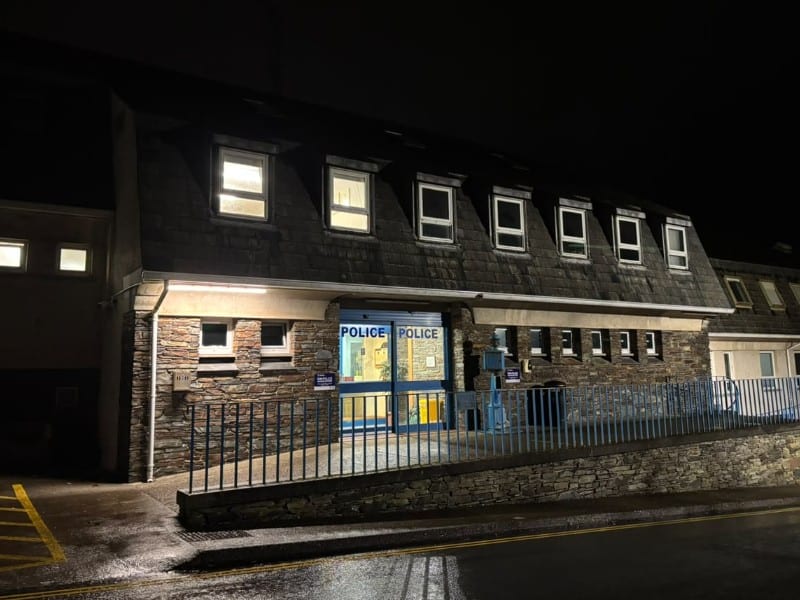
An MHK is leading calls for the creation of a system to investigate complaints against police officers which is completely independent of the Isle of Man Constabulary.
Joney Faragher is to move the motion in December's sitting of Tynwald; against the background of mounting criticism of the current process.
Indeed, Manx Radio has spoken to members of the public who've been dealing with the constabulary's existing complaints procedure and have raised concerns that officers are 'investigating their own colleagues and friends'.
They told us that they would welcome the approval of Ms Faragher's motion as a means of ensuring truly independent oversight of police complaints.
QUESTION TIME
The Douglas East member initially raised the topic in the Island's parliament this month (17 November).
During Tynwald's question time, she asked the justice and home affairs minister 'when her department intends to establish a system for investigating Isle of Man Constabulary complaints in which all complaints are investigated at first instance by someone independent of the constabulary itself'.
In response Jane Poole-Wilson told members she was 'aware of concerns relating to police complaints' but outlined the wider context:
The minister also admitted there are 'issues with the current legislative framework relating to police complaints and conduct matters more broadly that can be addressed in order to improve the system for everyone involved'.
She told members: "As such, I intend to bring forward legislative amendments to modernise and enhance the complaints framework with the aim of providing a fair, proportionate, clear, transparent, cost-effective and suitably independent process.
"While the department's prioritisation is subject to review at present, I hope to consult on these changes in the second quarter of next year with a view to introducing the required legislation to the branches following any necessary amendments."
However, these legislative amendments have long been mooted.
As Ms Faragher highlighted in Tynwald this month, those potential amendments were mentioned in the court in July last year:
In terms of progress, Mrs Poole-Wilson said changes need to be made to primary legislation, so it was a 'bigger piece of work' than could be progressed during the last administration.
Speaking to Manx Radio, Ms Faragher said she brought forward the motion for next month's sitting to see if she can secure the support of her colleagues to see specific changes enacted, as she's 'not convinced the department understands that independent oversight of investigations is not the same as independent investigations':
PROCESS
So, what is the current process for police complaints?
As the justice and home affairs minister told Tynwald: 'In the Isle of Man, if the constabulary receives a complaint relating to an individual officer's conduct, it is passed to the Professional Standards Department and they notify the Police Complaints Commissioner (PCC), who is independent of both the department and the constabulary. Then:
- If the complaint is to be formally investigated, the responsible delegated officer must consult the commissioner concerning the appointment of an investigating officer.
- The commissioner then considers whether to supervise the investigation and in certain cases is required to do so by law.
- In others, the commissioner may supervise where it appears to be in the public interest to do so.
- Where the commissioner supervises an investigation, this involves meeting regularly with the investigating officer to discuss the scope and progress of the investigation and, where necessary, give directions as to how it should be conducted.
- Where an investigation is not supervised, the commissioner will still receive a copy of the investigator's report and is notified of the outcome.
- Where the commissioner supervises the investigation, the investigating officer's report is provided directly to them.
- The commissioner reviews the investigation report and supporting evidence and provides a supervision report to the officer responsible for handling the complaint, which is also shared with the complainant.'
The key sticking point here, for many, is the fact that the investigating officer in this process will be a member of the Isle of Man Constabulary.
In essence, a serving officer will be considering a complaint against another serving officer.
INSPECTORATE
The call for a fully independent police complaints system is nothing new.
In 2022, Douglas South MHK Claire Christian asked the DHA: 'What consideration has been given to internal investigations being administered by the Independent Office for Police Conduct or another external investigating body?'
She was told: 'The Independent Office for Police Conduct is the body established to investigate the most serious and sensitive incidents and allegations involving the police in England and Wales.
'The constabulary uses guidance issued by the IOPC to inform the processes undertaken in respect of police complaints.'
You can find that written question HERE.
The response to Ms Christian's question also mentioned an upcoming inspection of the Isle of Man Constabulary by His Majesty’s Inspectorate of Constabulary and Fire and Rescue Services.
That review, published in February 2023, recommended such an independent mechanism be developed.
It stated: "By October 2023, the DHA should create an independent police complaints investigation process."
You can find the inspectorate report HERE.
But in its response to that report, the DHA disagreed.
It stated: "Less than 10 complaints reach formal investigation each year and therefore the establishment of an independent body is not appropriate and the costs prohibitive.
"This recommendation fails to take into account the Isle of Man context and previous reviews.
"A similar recommendation by a Tynwald Select Committee was rejected after consultation with what is now known as the Independent Office of Police Conduct and the Northern Ireland Police Ombudsman.
"As in the UK it is not considered appropriate for all complaints to be independently investigated, and the current legislation already enables the department to refer a complaint against the Chief Constable to a UK Force."
You can find that response HERE.
QUESTIONS
Since 2023, questions over police complaints have continued to be raised.
In a Tynwald question for written response last May, Arbory, Castletown and Malew MHK Jason Moorhouse asked the DHA a series of queries about the police complaints process.
You can find that written question HERE.
And this week, a Tynwald written answer published in response to a question from Arbory, Castletown and Malew MHK Kirrie Jenkins reiterated Mrs Poole-Wilson's answers from the floor of Tynwald on 17 November, stating that 'the evidence underpinning the department's 2023 position has continued to be reviewed'.
You can find that answer HERE.
PUBLIC OUTCRY
However, it's clear that the latest conversation around police complaints procedure comes following public outcry on social media.
An anonymous poster took to Facebook on 5 November to allege they were sexually assaulted by a serving officer 'a couple of years ago'.
They claimed the police had 'repeatedly presented [them] as not wanting to pursue a complaint' despite their insistence to the contrary, and alleged that repeated attempts at communication with officers had been ignored.
The constabulary responded to the serious allegations via its own statement on Facebook, stating: "We are committed to ensuring appropriate accountability and maintaining public confidence in policing."
You can read more HERE.
Ms Faragher argues an entirely independent process would help restore any doubts the general public may have.
She told Manx Radio: "I really do think that this is something that's really important for public faith and confidence in the service and just for, you know, actually protecting good officers as well, because actually the vast majority of people who work in the police force, in my view, are attracted to it for the right reasons.
"But there's absolutely no question that there will be some people who are attracted to it for the wrong reasons - and research obviously bears that out.
"So it's just really important to have the independence and I'm not sure that the minister is promising to bring us that."
CAN THE ISLAND LEAD THE WAY?
The common theme in the DHA's stance is that our complaints process is modelled on the way the UK does things.
Indeed, in Tynwald this month, the minister said: "The police conduct complaints framework in the Isle of Man reflects an approach that aligns in part to standards in England and Wales but also balances the practical realities of resourcing in a small jurisdiction.
"It's important to say that the majority of such police complaints in England and Wales are also handled by the police in the first instance":
But Ms Faragher argues it's 'misleading' to say the Island can be compared with England and Wales, 'because we just don't have the oversight' that they do across:
In addition, it could be argued the Island should blaze its own trail when it comes to police complaints.
Last week (18 November), the UK Home Secretary addressed the - National Police Chiefs' Council (NPCC)/Association of Police and Crime Commissioners (APCC) Partnership Summit and acknowledged that despite falling crime rates there, public trust and confidence in policing have both fallen by eight and 12 percent respectively over the last decade.
That is due, in part, to high profile cases involving serving police officers in recent years.
As Shabana Mahmood told NPCC/APCC members: "The vast majority of police officers are true public servants. They join because they are called to serve. Theirs is not just any job – it is the job.
"But while this is undoubtedly true of most officers, it is sadly, not true of all.
"There were a staggering 16,000 allegations of police misconduct in the year ending March 2025, fully 20 percent more than the year before.
"And behind the stats are a series of shocking stories.
"These include the 15 officers found guilty of gross misconduct at Charing Cross after the BBC’s Panorama laid bare the appalling culture at the station.
"And the “toxic” WhatsApp groups at Cambridgeshire Police, for which a former sergeant has been found guilty of misconduct, 12 other officers have been investigated, and two have been convicted of misconduct in public office."
However, despite that falling public confidence, the Island continues to model its policing standards on that used in England and Wales.
"We have an institution that doesn't hold a lot of public faith in the UK, that we are saying: 'Oh, but look, we're just as good as them!' When A, we're not, [and] B, they're not good." - Douglas East MHK Joney Faragher
But it is worth noting that a change of model is not something that has been entirely ruled out.
In Tynwald this month, Minister Poole-Wilson told members: "Our Police Act sets out in schedule one that the chief constable is responsible for the administration of complaints.
"In practice, that is delegated to a superintendent and the Professional Standards Department.
"So I do think that is an appropriate mechanism.
"However, I also think that the independent oversight of that whole process absolutely matters and I think that's where there absolutely is scope for us to, through the legislative changes that we bring forward, make sure that we have a suitably independent, proportionate and cost-effective mechanism that commands public confidence."
SARAH'S LAW
Meanwhile, at the December sitting, Ms Faragher will also attempt to get the backing of fellow Tynwald members on a motion regarding a Child Sex Offender Disclosure Scheme.
The Douglas East member wants the Department of Home Affairs to develop and bring forward proposals, by June 2027, for the introduction of a law equivalent to 'Sarah's Law'.
Named for eight-year-old Sarah Payne, who was murdered by a convicted sex offender in West Sussex in 2000, Sarah's Law allows parents to ask police if someone with access to their son or daughter has been convicted or suspected of child abuse.
It's another topic Ms Faragher raised in Tynwald this month.
She asked Mrs Poole-Wilson 'whether her department has reconsidered its previous position that there are no plans to introduce a child sex offender disclosure scheme equivalent to Sarah's Law in the Island, and, if not, why not'.
The minister told members 'the introduction of a similar approach in the Isle of Man has been considered by the department on a number of occasions', but that 'the department's position remains that there are currently no plans to introduce an equivalent scheme' here:
But Ms Faragher argues it's 'difficult to understand why it's hard for us' to implement Sarah's Law here, when the calls for it 'go back decades':
Both motions will be debated in the December sitting of Tynwald.
You can hear the full interview with Joney Faragher MHK in the latest edition of our Newscast, available now.
 Westminster talks focus on financial crime
 MHK calls for migration pressures on schools to be identified early
 DfE 'aware of uncertainty' surrounding future of Dealz
 Arbory and Rushen Commissioners 'optimistic' about new Charter for Change
